

Preparation
Getting Ready
Preparing For Cape Camino
A Pilgrim’s Mindset
A pilgrimage, according to many disciplines, is a space to cleanse. It is a journey, often into an unknown or foreign place, where a person goes in search of new or expanded meaning about themselves, others, nature, or higher good, through the experience.
To turn a walk into a pilgrimage, set the intention to do so. Know that the unexpected will occur, things may not go according to plan, and you will be tested and challenged throughout. But most of all, keep your awareness: of how you feel, what you think, how you react.
Route Navigation
Itineraries
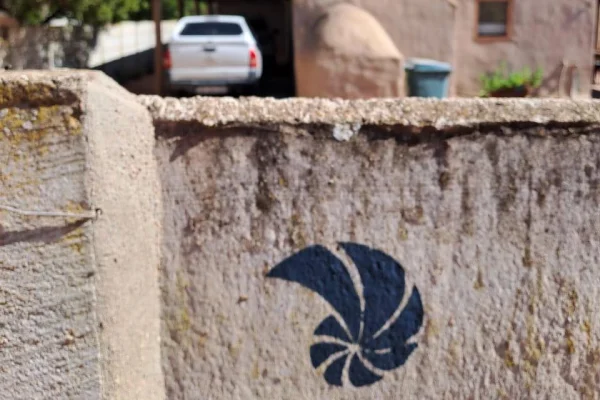
Signage
There is limited signage along the route. Hosts are constantly putting up signs, please feel free to assist.
On some days the route is well marked.
Maps
Maps are created for each day by pilgrims and by hosts on the route. If you have created your own, please feel free to share your maps with us after each day.
If you choose to walk ahead and are comfortable using a map, please go ahead.
The Peninsula route has its own eBook with detailed maps for each day. We recommend also getting a Slingsby map of the Cape Peninsula.
Google Maps
The entire route is marked on Google Maps which is on our Route page.
Many pilgrims like to walk at their own pace. If you walk faster than the chaperone and other pilgrims and prefer to go ahead, use Google Maps to navigate.
You’ll need a local sim card with data and the Google Maps App. When loading it, select the ‘walk’ option.
Google Maps works offline and shows you your live location in the form of a blue dot. You can zoom in and out to see distance and terrain ahead, as well as where your end location is. You can even navigate through sand dunes and along foot paths.
Please bear in mind that Google Maps will sometimes try to suggest main roads, which is far from ideal and the route is mostly off-road along beautiful natural areas. It’s advisable to use your discretion, and the advice of the chaperones, to help plan your route, if you prefer to walk ahead.
Connection & Community
Communication
Cape Camino Forum
A safe space online to share pics, connect with other pilgrims, invite pilgrims to join you, offer and receive advice. All on Facebook.
https://www.facebook.com/groups/capecamino
We encourage you to use the Forum as much as possible, to assist creating an organic and true flow of information.
Solitude and Socialising
Cape Camino hosts welcome you into their spaces as guests. They are eager to please- if you would like quiet time or a meal alone, please ask for it. They are aware of what it means to be on Camino, but can sometimes not help being so friendly.
There is no expectation to socialise if you do not want to. Practice setting boundaries and politely excuse yourself. Please respect hosts boundaries if they too prefer to politely decline socialising. The same applies to socialising with other pilgrims.
Pilgrim Passport
Transport
Cape Camino doesn’t offer transport services or pick ups, but we’ve connected with drivers along the route who can all collect from the Cape Town International Airport and Cape Town surrounds
Route 1 & 2
Shawn Hewit
Riebeek Valley Tours and Transfers
082 528 6785 or goodintentconnections@gmail.com
Theresa
Blou Porcelein in Hermon
082 378 7595 theresa@swartlandmail.co.za
(Theresa also offers pick up on the route if there’s an emergency or you are tired)
Route 3
Jeff Sillence
Velddrif
083 233 6015
or
melanie@corecompetency.co.za
Route 4 & 5
Niel Bumblebee Taxi Service
Langebaan
076 084 7981
Bel n Pel Dial n Buddy
Saldanha Bay
071 034 9254
Jean de Bruyn
Saldanha Bay
060 874 1195
Hendrik’s Taxi
084 793 3340
Fritz Transport
Veldriff
079 129 0047
Route 6
Marius on the go
079 486 4228
Deno Farmer (luggage transfer only)
071 142 1181
Jamie Orpen
076 770 2887
info@navigaterentals.co.za
Camino Lite
A self-supported pilgrimage with rest-house bookings and essential route info – ideal for independent pilgrims.
- Pre-booked rest house
- Accommodation with bedding only
- Route development fee
- Daily directory and itinerary
- Camino passport (Credential) & t-shirt
Camino Plus
Includes rest-house bookings, partial chaperone support, some meals, luggage transfer, and a preparation kit.
- Pre-booked rest house
- Accommodation with bedding only
- Route development fee
- Daily directory and itinerary
- Daily breakfast & supper
- Chaperones where necessary
- Daily luggage transfers
- Pre-Camino preparation kit: 5 day Mindfulness Program
- Option to keep dates private
- Complimentary Camino gear: Credential Passport, t-shirt, buff, bag-tag, solitude badges
Camino Cape Peninsula
Includes rest-house bookings, partial chaperone support, and a preparation kit.
- Pre-booked rest house
- Accommodation with bedding only
- Route development fee
- Daily directory and itinerary
- Chaperones every day
- Pre-Camino preparation kit: 5 day Mindfulness Program
- Option to keep dates private
- Complimentary Camino gear: Credential Passport, t-shirt, buff, bag-tag, solitude badges
Sacred Spaces
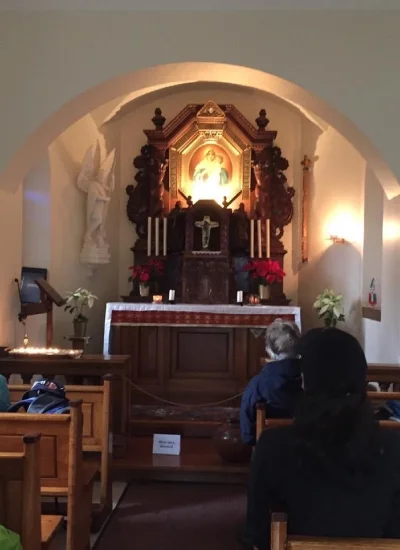
Cape Camino is anchored by a wide range of sacred and meaningful spaces and is inclusive of all beliefs and backgrounds. These places offer a sense of pause, safety, and depth along the journey, adding a spiritual dimension to your personal pilgrimage – only if you choose to engage with them.
All sacred spaces are listed on the Cape Camino Google My Maps and on the relevant Route pages. You are invited to explore those that resonate with you. Visiting them is entirely optional and can be done during your day’s walk or in the afternoons.
These spaces include shrines, kramats, churches, temples, First People caves, labyrinths, viewpoints, and other natural places of significance.
Cape Camino is not a religious route. Rather, it offers open space – a framework you can use in your own way – for reflection, curiosity, rest, or meaning-making, shaped by your personal perspective.
Please note that there are significantly more sacred sites on the Peninsula routes than on the Country routes, reflecting the density and layered history of the area.
Rest House Establishments
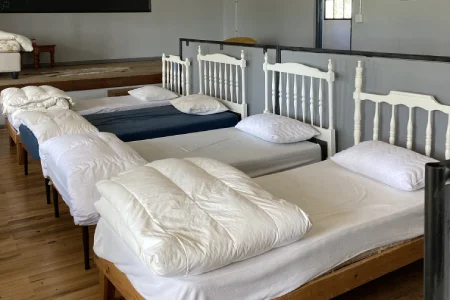
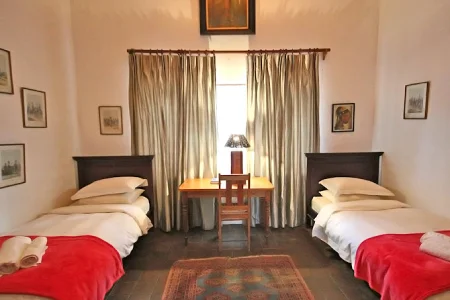
Cape Camino accommodation is clean, safe, and simple, designed to support the pilgrimage experience rather than luxury travel. Hosts include a mix of home stays, farm stays, backpackers, lofts, guesthouses, beach cottages, and private rentals. Each host is different, reflecting the character of the place and the people who live there.
Home stays and farm stays are a core part of the Camino. Along the route, residents open their homes to welcome passing pilgrims. These stays are personal, grounded, and community-led.
Most pilgrims share rooms and bathrooms, unless a private room has been requested in advance. Shared accommodation is part of the Camino experience and often where connection and conversation naturally unfold.
Private rooms may be available on request and at an additional fee, subject to availability. Even with private rooms, bathrooms are often shared.
Think of these rest houses as a boutique albergue – comfortable, welcoming, and purposeful – rather than a hotel.
Chaperones
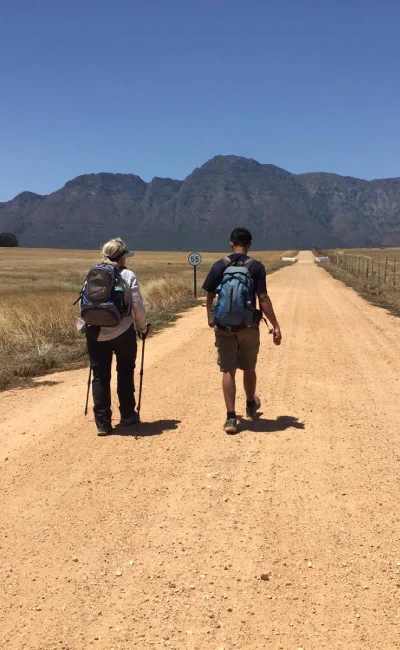
Unique to Cape Camino, on some days a chaperone is required for extra safety and navigation. Other days do not require or have a chaperone. On these days use your maps provided and the route should be marked by your host.
Where applicable chaperones will meet you at first light in summer. It gets very hot and we advise you to stick with this timing. For the cooler winter months please chat to chaperones about your set-off time.
If your Camino falls on a public holiday/weekend please be patient with chaperones that have to travel to meet you. Public transport can delay their movements. If you’d like to offer to arrange a lift for them with a local driver or host so that they can be there earlier, you are encouraged to do so. Use the transport information above to arrange.
The chaperones role is to assist with safety and navigation.
They, as well as your hosts, are your points of call when on Camino, however, cannot solve all your problems and are not responsible for your experience. They are not history experts. They are not there to carry your bag. They walk at a steady pace. They respect your time on Camino. If you are running late please contact them and if you decide to leave early or take a rest day, please let them know.
Gratuity is welcome and appreciated either as a tip or as a coffee or snack on route. When tipping, pilgrims give from R100-R500 but this is totally up to you
Training
- Please follow a sufficient training plan weeks before your Camino.
- Practise both long distance and incline walking. (Download Fitness Guide Here)
- Include 3 consecutive days of 15km per day in your training.
- It is advisable to mentally prepare yourself for challenges and
difficulties. A Camino is not a holiday.
Packing Lists
Nourishment
Water
Alcohol
Meals
Lunch
Lunch is for your own arrangement- except for Immersive Caminos.
There are farm stalls and ‘pad-stals’ scattered throughout the route where you may be able to purchase biltong, cooldrinks and other dried goods.
Some hosts offer lunch at an extra cost. They require at least 1 week warning to provide this meal since many of them only do grocery shopping once per week. Settle with them directly.
Lunch Stops
Snacks

Essential items to remember to pack
- Insect repellant, especially for a Camino in the spring and summer months.
- Earplugs if you are a sensitive sleeper. Spaces are shared unless you have booked otherwise. Couples will usually have a private room.
- A lunchbox for your packed breakfast (an eco-friendly option to using plastic every day). A suitable size is one that fits a yoghurt cup.
- You will carry a daypack and in it we suggest: enough water for 5 hours of walking, your lunch box, a snack,sunblock, a hat, wind sheeter, plasters, painkillers, camera, cell phone, journal. A towel.
- A few clothes pegs to hang up your towel and other washing. A portable washing line is also a good idea.
- A sheet and pillow case for extra comfort. Sleeping bags not essential but recommended for winter months.
- Warm clothes for the evenings.
- Cash for your journey. We recommend between R200-R500 per day. This could be for cool drinks, beer and wine,tips.
- Vix and/or coconut oil for blisters.
Laundry
Speak to hosts on arrival about laundry for a fee. This is arranged by you. Or, bring some hand washing powder along and in true pilgrim style wash as you go.
Deb Shucka who walked the full route writes:
“The first laundry services were available on Day 7. After that it was possible every 5 or 6 days, sometimes every other day. Because tumble driers are rarely used, getting things dry was a challenge, especially if I arrived later in the day. The only thing that was of real concern was socks because it was impossible to get them clean by hand (sand, dust, grit).
So if you bring extra socks, and wash underwear by hand (or bring extra), it’s possible to go more than a week. Sweating wasn’t a big concern, so I hung my clothes out to air at the end of a walking day, and they were good to go the next day. A couple of times I washed tops by hand because I was wearing the same thing every day. Most hosts would not take payment, but accepted tips for the workers who did the laundry. Because I checked my bag, and didn’t need to use travel sizes, I did not need to buy additional toiletries along the way.”

Cape Camino Books
A project initiated by one of our chaperones, Hanti Badenhorst.
Books are given to local children in an effort to raise literacy in rural areas. If you would like to contribute, please bring children’s books along in your backpack.
Magazines are also appreciated (in Afrikaans if possible).
Or buy books in Wellington at Book Traders 14 Burger St, Wellington, 7655, Hester +27 72 997 4813.
Disclaimer
Please read our cancellation and rescheduling policy carefully before booking.
Pilgrims are responsible for doing their own research in advance, including understanding the terrain, distances, weather conditions, and local environment. Cape Camino is not a guided tour or organised hike. It is a personal pilgrimage, and our role is to support you with logistics rather than lead the journey itself.
Cape Camino is a community-owned national asset, walked from a personal perspective and experienced in an individual way. Each pilgrimage unfolds differently. We encourage participants to arrive with openness, full presence, and a willingness to let go – allowing space for reflection, change, and the deeper effects that often continue well after the walk is complete.
All pilgrims are required to sign an indemnity form prior to departure, acknowledging personal responsibility for their safety, wellbeing, and any loss of property or injury incurred during the Camino.